
Industrial activities can introduce a wide range of contaminants into water, including suspended solids, organic pollutants, chemicals, dissolved minerals, and certain metals. If these contaminants are not properly managed, they can affect industrial processes, equipment, wastewater quality, and surrounding water resources.
This makes effective water treatment plants in Sri Lanka important for industries that require consistent water quality and responsible wastewater management.
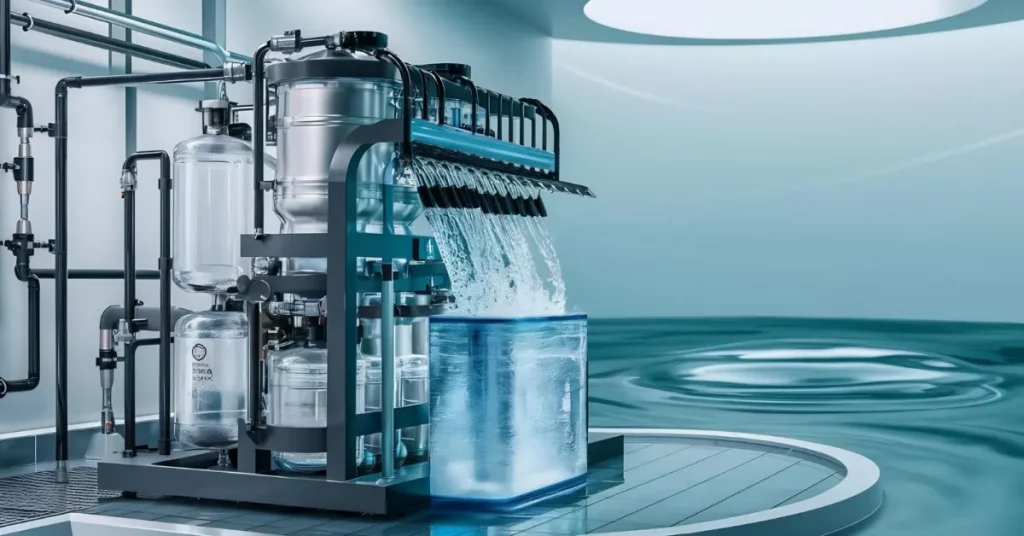
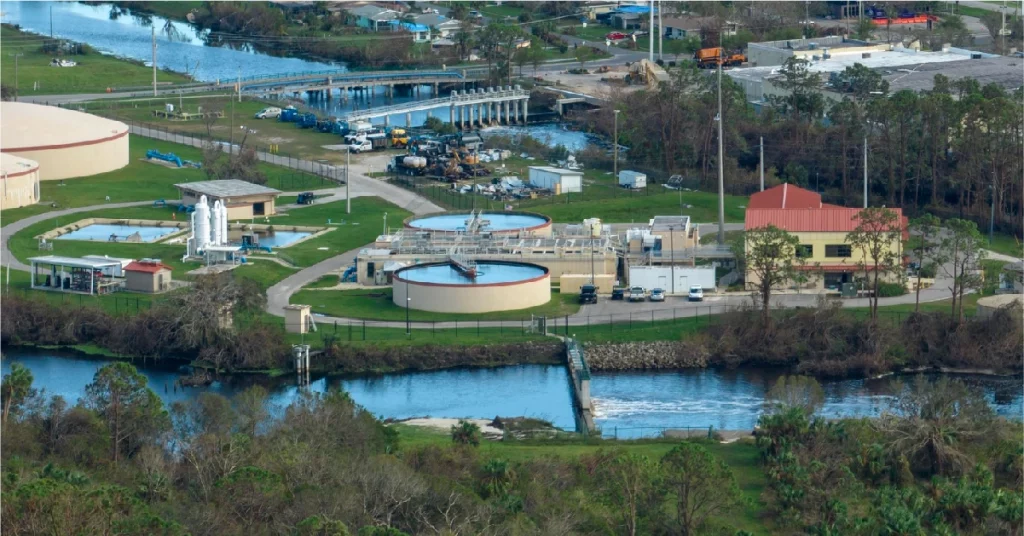
Modern industrial water treatment systems in Sri Lanka combine processes such as clarification, filtration, chemical treatment, biological treatment, and membrane technology according to the characteristics of the water and the required output quality.
What Are Industrial Water Contaminants?
Industrial contaminants are substances that enter water through manufacturing, processing, utilities, or other industrial activities.
Common contaminants can include:
- Suspended solids
- Organic pollutants
- Dissolved salts
- Oils and grease
- Chemicals
- Heavy metals
- Microorganisms
The type and concentration of contaminants vary significantly between industries.
Therefore, treatment should begin with an assessment of the source water or wastewater rather than using the same process for every application.
Why Industrial Contaminant Removal Matters?
Poor water quality can create problems throughout an industrial facility.
Equipment Protection
Suspended solids, hardness, dissolved minerals, and other contaminants can contribute to scaling, fouling, and corrosion.
Process Water Quality
Manufacturing processes may require water with controlled levels of specific contaminants to maintain consistent operations.
Wastewater Compliance
Industrial wastewater needs appropriate treatment before discharge or reuse to reduce pollution and meet applicable requirements.
Water Recycling
Effective contaminant removal can allow treated wastewater to undergo further purification and return to suitable industrial applications.
How Do Water Treatment Plants Remove Industrial Contaminants?
A modern water treatment system in Sri Lanka may combine several treatment stages.
1. Clarification
Coagulation, flocculation, and sedimentation help remove suspended particles and turbidity.
Chemical treatment brings fine particles together into larger flocs that can settle more effectively.
2. Filtration
Filtration removes remaining suspended particles after clarification.
Depending on the water quality, treatment may use:
- Sand filters
- Pressure filters
- Multimedia filters
- Activated carbon filters
Filtration can also serve as pretreatment for downstream membrane systems.
3. Biological Treatment
Biological treatment uses microorganisms to break down biodegradable organic pollutants.
This is particularly relevant for industrial wastewater containing significant organic loads.
Technologies can include:
- Activated sludge
- MBBR
- SBR
- MBR
4. Membrane Treatment
Membrane technologies provide advanced separation where higher water quality is required.
Depending on the application, systems can use:
- Ultrafiltration
- Nanofiltration
- Reverse osmosis
UF can remove particulate, colloidal, and microbiological contaminants, while RO provides higher-level removal of dissolved salts and other contaminants.
The supplied Ion Exchange material identifies biological treatment and membrane filtration among the technologies used for industrial wastewater treatment.
How Are Heavy Metals Managed in Industrial Water?
Certain industrial activities can introduce dissolved metals into water.
The appropriate treatment depends on the specific metal, its concentration, chemical form, and the required treated-water quality.
Treatment may involve:
- Chemical precipitation
- Coagulation and clarification
- Filtration
- Ion exchange
- Membrane treatment
Ion exchange can be particularly useful for selected dissolved ionic contaminants where resin chemistry and feed-water conditions are suitable.
Ion Exchange’s water-treatment capabilities include contaminant removal technologies for iron, fluoride, arsenic, nitrate, and uranium, supported by filtration, chemical dosing, ion exchange, and advanced purification systems.
Industrial Wastewater Treatment in Sri Lanka
Industrial wastewater treatment is different from raw-water purification because the wastewater characteristics are directly influenced by the industrial process.
Manufacturing
Manufacturing wastewater may contain suspended solids, oils, chemicals, and process-specific contaminants.
Food and Beverage
Food-processing wastewater generally contains biodegradable organic matter and suspended solids, making biological treatment an important component.
Pharmaceuticals
Pharmaceutical wastewater can contain complex organic and chemical contaminants requiring customised treatment.
Chemical Industries
Chemical manufacturing can produce wastewater with varying pH, dissolved contaminants, high TDS, and other process-specific pollutants.
The treatment system should therefore be designed around the actual wastewater characteristics and the required discharge or reuse quality.
Water Recycling After Industrial Treatment
Contaminant removal can also support water purification solutions in Sri Lanka that focus on recycling rather than discharge alone.
A typical recycling approach can be:
Industrial wastewater → Pretreatment → Biological treatment → Membrane treatment → Recovered water → Reuse
Depending on the required quality, recovered water can potentially be used for:
- Cooling
- Cleaning
- Irrigation
- Utilities
- Selected industrial processes
The treatment level must be matched to the intended reuse application.
Ion Exchange’s documented capabilities include sewage treatment and wastewater recycling using aerobic, anaerobic, and membrane technologies.
Factors to Consider When Choosing a Water Treatment System
Selecting the right industrial water treatment Sri Lanka solution requires an understanding of both the water and the process.
Feed-Water Quality
Important parameters can include:
- Turbidity
- TSS
- TDS
- pH
- Hardness
- Organic matter
- Specific contaminants
Required Water Quality
The required output depends on whether the water is intended for:
- Industrial processes
- Boilers
- Cooling systems
- Utilities
- High-purity applications
- Wastewater reuse
Contaminant Characteristics
The treatment technology should be selected according to whether contaminants are present as suspended particles, dissolved ions, organic compounds, or microorganisms.
Treatment Capacity
Flow rate, peak demand, operating hours, and future expansion should be considered when determining plant capacity.
Reuse Requirements
If treated water is intended for reuse, the treatment system should be designed around the quality required for the specific application.
Ion Exchange Water Treatment Solutions in Sri Lanka
Ion Exchange provides integrated water treatment systems in Sri Lanka covering drinking water, industrial water, wastewater treatment, recycling, and advanced purification.
Its capabilities include:
- Clarification
- Filtration
- Chemical treatment
- Ion exchange
- Membrane treatment
- Reverse osmosis
- Sewage treatment
- Wastewater recycling
Ion Exchange has also executed an integrated water-supply project in Sri Lanka for the National Water Supply & Drainage Board. The project addressed salinity in drinking-water supply caused by seawater ingress during summer and included water-treatment plants, intake infrastructure, distribution systems, automation, SCADA, and O&M support.
This demonstrates the company’s ability to integrate treatment technology, infrastructure, automation, and lifecycle support for complex water-management requirements.
Why Integrated Treatment Matters?
Industrial contaminants rarely occur in isolation.
A single wastewater stream can contain suspended solids, organic matter, dissolved salts, chemicals, and other contaminants.
This is why effective treatment often requires a combination of technologies rather than one process.
An integrated treatment strategy can provide:
Contaminant assessment → Pretreatment → Chemical or biological treatment → Filtration → Membrane purification → Reuse or discharge
The exact sequence depends on the water chemistry and treatment objective.
Conclusion
Industrial contaminants can affect water quality, equipment, production processes, and wastewater management. Effective water treatment plants in Sri Lanka therefore need to be designed around the specific contaminants present and the quality required at the treatment outlet.
Clarification, filtration, chemical treatment, biological processes, ion exchange, and membrane technologies can be combined to address different contaminant types and treatment requirements.
Ion Exchange brings these technologies together with engineering and lifecycle capabilities for industrial and municipal water-management applications.
Connect with Ion Exchange experts for industrial water treatment, contaminant removal, wastewater treatment, and water purification solutions in Sri Lanka.
FAQs
What contaminants are commonly found in industrial water?
Industrial water can contain suspended solids, organic pollutants, dissolved salts, oils and grease, chemicals, heavy metals, and microorganisms depending on the industrial activity and water source.
How are heavy metals removed from industrial water?
Depending on the specific metal and water chemistry, treatment can include chemical precipitation, coagulation, filtration, ion exchange, or membrane processes.
What technologies are used in industrial water treatment in Sri Lanka?
Treatment systems can combine clarification, filtration, chemical treatment, biological treatment, ion exchange, ultrafiltration, nanofiltration, and reverse osmosis.
Can treated industrial wastewater be reused?
Yes. After appropriate treatment and, where required, additional purification, treated wastewater can be reused for suitable industrial and utility applications.
How do I choose the right water treatment plant?
The selection should consider source-water or wastewater quality, contaminant characteristics, required output quality, treatment capacity, operating conditions, available space, and water-reuse objectives.